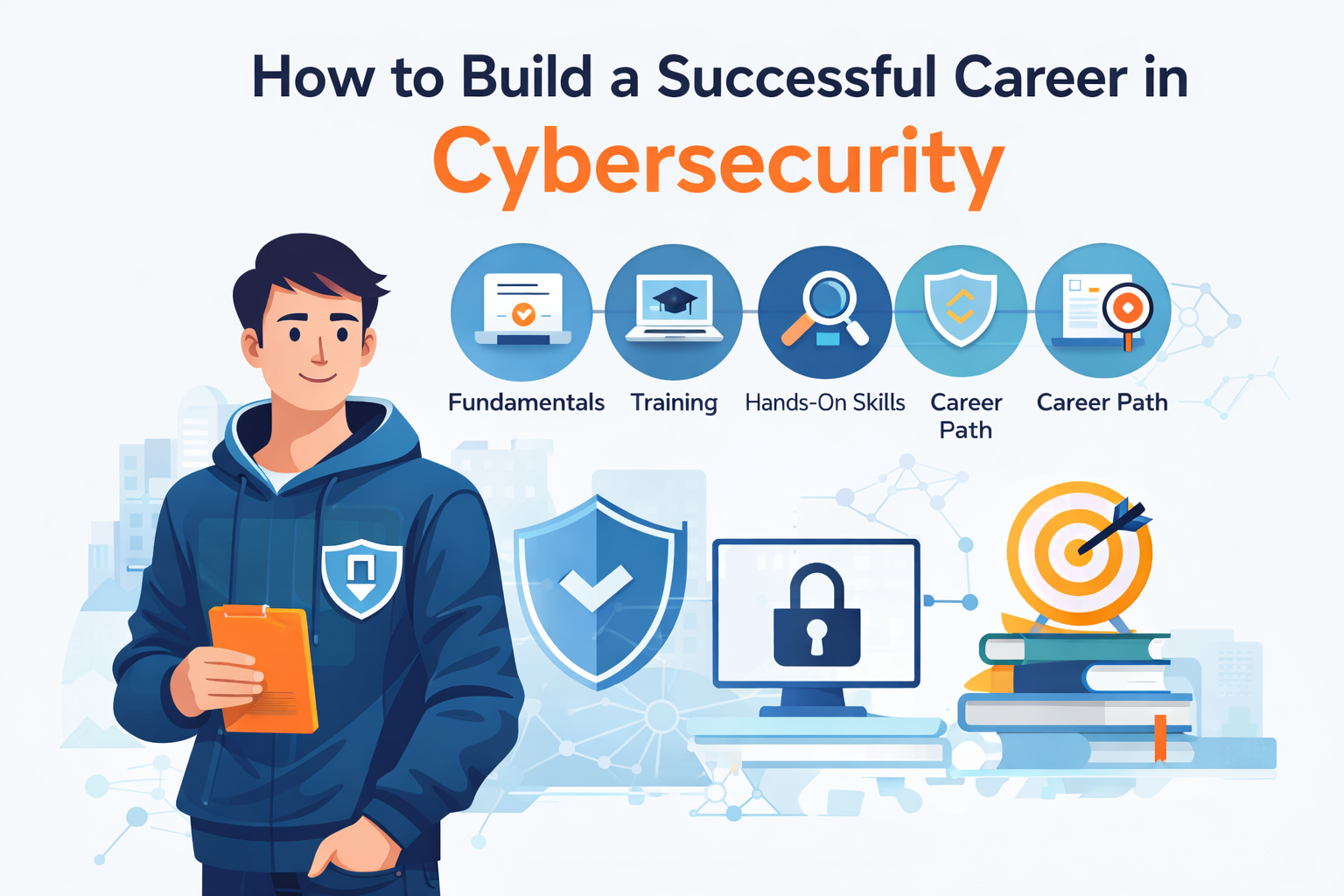
Cybersecurity has emerged as one of the most stable, high-growth, and future-proof career options in today’s digital world. With cyberattacks increasing across industries, organizations are actively looking for skilled professionals who can protect systems, data, and networks.
If you’re wondering how to build a career in cybersecurity — whether you’re a student, a working professional, or someone switching careers — this guide will walk you through the right approach step by step.
Why Choose Cybersecurity as a Career?
Cybersecurity is no longer limited to IT departments. Every organization today — from banks and healthcare to startups and government — depends on cybersecurity professionals.
- High demand and global skill shortage
- Strong job security and long-term career growth
- Multiple career paths (technical and non-technical)
- Opportunities to grow into leadership roles
Step 1: Start With Strong Cybersecurity Fundamentals
Many beginners make the mistake of jumping directly into advanced tools or certifications. Cybersecurity is a layered field, and success depends on strong fundamentals.
You should first understand:
- Basic networking (TCP/IP, ports, protocols)
- Operating systems (Linux and Windows basics)
- Core security concepts (threats, vulnerabilities, controls)
- How systems and data communicate
If you are completely new, start with a structured foundation before choosing any specialization. Our Zero to Job-Ready Roadmap for Freshers explains this step-by-step.
Step 2: Choose the Right Cybersecurity Career Track
Cybersecurity is a broad field. You don’t need to learn everything — you need to choose the right track based on your interest, background, and mindset.
1. SOC / Defensive Security (Blue Team)
This path focuses on monitoring, detecting, and responding to cyber threats.
- Ideal for beginners and non-IT backgrounds
- Involves SIEM tools, log analysis, and incident response
- Common roles: SOC Analyst, Security Analyst
If you are unsure whether SOC fits your profile, our Course Selector Tool can help you decide.
2. Ethical Hacking / Offensive Security (Red Team)
This track focuses on finding and exploiting vulnerabilities before attackers do.
- Best for people with strong technical interest
- Requires networking, OS, and security fundamentals
- Common roles: Ethical Hacker, VAPT Engineer
This path is recommended only after building strong fundamentals and hands-on lab experience.
3. GRC (Governance, Risk & Compliance)
GRC is a non-coding, business-aligned cybersecurity career path.
- Ideal for non-IT, management, audit, or finance backgrounds
- Focuses on policies, risk management, and compliance
- Common roles: GRC Analyst, Information Security Manager
If you come from a non-technical background, GRC is often the fastest and most stable entry into cybersecurity.
4. Tool-Based & Cloud Security Roles
Some professionals specialize in enterprise security tools and cloud platforms.
- Policy-driven and tool-focused roles
- Popular tools include Zscaler and cloud security platforms
- Common roles: Cloud Security Engineer, Security Administrator
Step 3: Follow a Structured Learning Roadmap
A clear roadmap is what separates successful professionals from those who feel stuck.
A typical beginner-to-job-ready roadmap looks like this:
- Phase 1: Cybersecurity fundamentals and lab setup
- Phase 2: Track-specific learning (SOC, GRC, or Offensive)
- Phase 3: Hands-on projects, labs, and real-world scenarios
- Phase 4: Resume building, interview preparation, and job readiness
You can explore the complete beginner roadmap here: View Fresher Cybersecurity Roadmap.
Step 4: Focus on Hands-On Skills, Not Just Certifications
Certifications are valuable, but they work best when combined with practical experience.
- Practice regularly in labs
- Work on real-world scenarios
- Build reports, documentation, or case studies
- Understand “why” behind security decisions
This approach prepares you not just to pass exams, but to perform confidently on the job.
Step 5: Prepare for Jobs and Long-Term Career Growth
Once you gain skills, the final step is positioning yourself correctly in the job market.
- Create a role-focused resume
- Optimize your LinkedIn profile
- Prepare for scenario-based interviews
- Understand real-world security workflows
If you are already working and want to move into senior or leadership roles, explore our Professional Upgrade Roadmap.
Common Mistakes to Avoid
- Skipping fundamentals and jumping into advanced tools
- Choosing the wrong track without understanding the role
- Over-focusing on certifications without practice
- Comparing your journey with others
Final Thoughts
Cybersecurity is not about being a genius hacker — it’s about learning systematically, practicing consistently, and choosing the right path for your strengths.
Whether you’re a student, a working professional, or someone restarting your career, cybersecurity offers opportunities for everyone — if approached the right way.
Not sure where to start?
Use our Course Selector Tool or talk to our experts to get a personalized cybersecurity career roadmap.